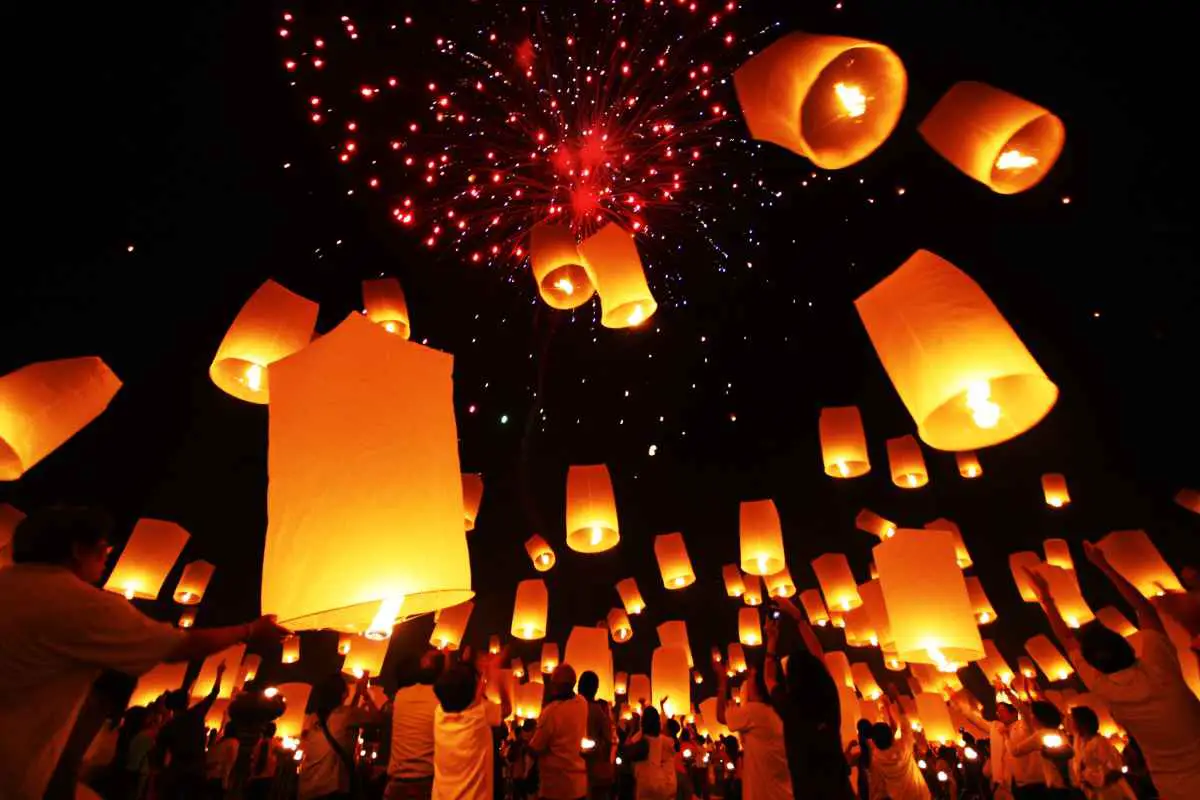
Chiang Mai is the entrance to the northern highlands of Thailand. Of course, you can not compare the scenery of the snow-covered mountains of Himalayas. The hill tribes and pagodas developed on top of the mountains bring in a various kind of beauty. Only a few decide to head north when in Thailand. Especially if you are on a brief trip. But it is the go-to location in Thailand in the winter months and throughout Loi Krathong.
It was after a year of living in Thailand that I decided to go to Chiang Mai myself. It is now the biggest urbane in north Thailand.
What's So Good About Chiang Mai
Chiang Mai was always popular with the locals. Thai natives enjoy to visit Chiang Mai for the opportunity to hang around in the mountainous areas up north. It is the option of location for a break from the heat and a chance to delight in cooler weather condition, which in Thailand is unusual.
But it has particularly been popular with digital nomads recently. Chiang Mai is far cheaper than Bangkok in the expense of living. And it has all the glitz and glamour for a fun night out. As the expat neighborhood grew, there came better cafes and shared work spaces. It became a backpacker's paradise. In a twist of events, expats suddenly disappeared and tourism fell. The reason for that is a matter of long discussion.
As I stated earlier, the weather is extremely important to your visit to Chiang Mai Excellent timing will provide you sweet memories; a bad one may suffocate you.
Finest time (December-- January): The best, the outright finest time is the peak winter season. FYI, there are no winter seasons in Thailand. However the last two weeks of December and the very first two in January are the coolest. The temperature level drops to around 18 ⁰ C in other parts of Thailand and 14 ⁰ C in Chiang Mai It can drop further to 4 ⁰ C or less in the hills around Chiang Mai. Keep that in mind if you plan to camp outdoors.
October, November, and February: These are the next best months after the peak ones. The days are not that damp and rains are occasional.
Bad time (March and April): Contrary to what's on the internet, these are the worst months to check out Chiang Mai. March and April are dry and most popular in Thailand. Plus a brand-new season of harvest leads to raging forest fires practically every year around Chiang Mai. This develops a suffocating cloud of smoke over the whole city and air quality drops to unsafe levels. The majority of flights are cancelled. Prevent travelling during this time.
May-- September: This is not a bad time to check out but the heat can be overwhelming. It likewise presses up the humidity. Restricted tourist crowd results in great deals by hotels and tour operators.
Joyful time in Chiang Mai: While Songkran is celebrated with a lot of enthusiasm; think it through because it falls in the middle of April. Loi Krathong is another festival celebrated with a lot of glamour in Chiang Mai.
If you wish to witness this, it depends on the last week of October or the first week of November. Check beforehand since the dates shift. Read our total guide on commemorating Loy Krathong in Thailand.
Yi Peng festival commemorated in Chiang Mai.
How To Reach Chiang Mai.
You can utilize the following to reach Chiang Mai:
Flights: Chiang Mai has a practical and functional International airport. If you are taking a trip from inside Thailand, the flight tickets are incredibly economical if you book ahead of time. The airport likewise connects a couple of worldwide destinations in Singapore, China, Taiwan, Myanmar, and Laos. The airport is just 5 km outside the city centre and you can take a taxi (USD 5), an airport bus, a songthaew or a tuk-tuk to reach the city.
Bus: I discover over night buses the best choice if you are travelling inside Thailand. You can likewise take a cross-border bus to and from Myanmar and Laos. You can schedule a bus in Thailand via busonlineticket, 12goasia or Bookaway.com
Train: However restricted, there is still connection from Bangkok to Chiang Mai by train. It is a comfortable way to travel. You can book a sleeper berth all on your own or even a whole compartment for your household. The drawback is that the travel time is slightly longer and costs nearly double of what you would spend for the bus. There are five direct trains from Bangkok including an over night train. You can check the schedule on seat61.com and book tickets on thairailwayticket.com (official site).
How To Go Around In Chiang Mai.
To walk around in Chiang Mai tease or combination of these alternatives:.
Personal taxi: Most practical and budget friendly alternative in Thailand, cabs are fantastic. You can simply wave at one on the street or book one on Grab app (like Uber). Cabs are very safe in Thailand but do not get into unneeded arguments, even if you are.
Motorbike cabs: These do excellent inside the city for single riders with light baggage. They are cheap and you can get one right throughout any street in the city. Simply provide your destination (on a paper or google equate) and hop on for a ride. The cost is around 10THB per kilometre however that can vary obviously (depending upon your driver). Hold on tight however, these are not known for security.
Motorcycle taxis cab in Bangkok at a taxi stand.
Two-wheeler leasing: If you are comfy driving on Asian roads and have strong travel and unintentional insurance, this can be for you. Leasing a two-wheeler offers you versatility and suffices for 2 people. You can ask for one at your hotel or a bike rental shop.
A day rent is around 250 THB depending upon the lorry omitting fuel. You don't necessarily require a chauffeur's license.
Scooter leasing in Thailand.
Songthaew: Songthaew are like minibus in Thailand. They go around in many paths selecting up passengers and dropping them off on a single path. The only thing is that you require to keep a track of your location and press a button intimating motorist that you require to get off.
Tuk-tuk: Loud and elegant, you haven't been to Thailand if you did not ride a tuk-tuk. These are good if you have a great deal of baggage or if you simply want a fun and convenient trip. The downside is that the cost is priced quote randomly by the motorist and you will have to bargain well. Still, great for an individual trip.
Day trip or Day Taxi: If you do not desire to go through all the browsing and navigation, simply take a tour. We utilized them for a day trips to locations situated far outside the city like Doi Inthanon. You can also employ a personal cab for a whole day for more convenience and flexibility.
Schedule a day cab: Chiang Mai and Surrounding Locations One Day or Numerous Days Vehicle Charter.
There is also a bus network inside the city but seldom used by tourists. Find out more about the Chiang Mai RTC City Bus.
Google Maps are typically unreliable in Chiang Mai. Download regional maps via maps.me that will direct you even when disconnected from the web.
1. See Chiang Mai Temples.
Chiang Mai has beautiful temples. Most of the popular ones lie in the Look at more info city center, also called as 'old city'. If you have had your share of temples before coming to Chiang Mai, you can possibly go to one or two and leave the rest.
An extremely distinct experience is the chance to talk with a monk about their lives. There are 'monk chat' programs throughout 5 temples in the city. The most popular is Wat Chedi Luang where you can catch a monk between 9 am and 6 pm on the north side of the temple premises seated around a table. Simply present yourself and reveal your desire to talk.
If you want to read about some of these temples in-depth, describe this post on 15 Jaw-dropping temples of Chiang Mai.
2. Take A Day Trip Of Doi Inthanon.
Doi Inthanon is the highest peak in Thailand. It is located at an hour's drive from Chiang Mai city. However it is not just the peak that you go to see. There is a total national forest around it and has a lot of tourist attractions. There are waterfalls, temples, sanctuaries, Karen native hill people towns, gardens, and even a royal project that the late king set up for the advantage of the locals. It will take a whole day to see all of this, so prepare your travel plan accordingly.
As for me, this is a must-visit location. The day we went was the coldest day of the year and the temperature level dropped to -1 ⁰ C early morning. By mid-day, it was pleasant again with sunlight. If you like outdoors, consider camping here. The park provides a camping tent with mats and has shops to consume in. We took a day trip with a regional tourist guide and it was really hassle-free. Make sure you take warm clothing with you when you go visiting.
Doi Inthanon timings: 6 am to 4.30 pm.
Doi Inthanon ticket costs: It costs 300THB for foreign travelers and is totally free for Thai nationals to get in. If you are taking an individual lorry, it costs an extra 30THB per vehicle.
How to reach Doi Inthanon: If you are doing only a day trip, the best way is to take a trip with a group day trip. They understand the way, they pay all the costs, there is an easy meal included and a local Thai guide to talk to who informs you many stories. You can connect with a regional travel agency mychiangmaitour for personalized trips.
You can also take a personal taxi if there are more people in a group however is pricier. A day tour in a personal cab will cost you a little bit less than 3000THB without the tickets.
However if you desire more versatility, you can also lease a two-wheeler or an automobile from the city. This lets you drive at your own speed. If you are seeking to camp, this is a great alternative. Tents and sleeping beds are readily available in the park itself. If you desire something more comfortable, you can shell out a little more money with 3-star centers or Glamping.
As for public transport, there are songthaews available from the town hall (yellow colored) but tourists normally do not use them. You will have to alter them for another one at a junction. Likewise, since the park is so huge that you will require a vehicle inside the park. There is no public transportation that runs inside the park. Unless you have a plan, don't take a one-way transport.
3. Wat Phra That Doi Suthep.
Wat Phra That Doi Suthep is one of the most essential shrines of Theravada Buddhism. Pilgrims not only come far to go to from other parts of Thailand, however also from Laos, Myanmar, Singapore, China, and India.
In a summary of the legend, a monk by the name of Sumanathera dreamt of finding the bone in Pang Cha. King Dhammaraja of Sukhothai, eager to see the bone tossed a ceremony for the monk however found the relic underwhelming.
Another king from the Lanna dynasty (present-day north Thailand) welcomed the monk. The elephant climbed up Doi Suthep, trumpeted three times and dropped dead.
It was when a pilgrim's journey to reach the temple. The temple has actually progressed over time with pagodas and spires grander than the last one.
Wat Phra That Doi Suthep timings: 6 am to 5 pm. Early morning hours are best to go to.
How to reach Wat Phra That Doi Suthep: You can ride the way with a rented two-wheeler or book a day taxi or a group tour for the entire Doi Suthep with other tourist attractions.
If you are on a spending plan, you can hail a songthaew (red-colored open bus) from Chang Pauk Gate in Chiang Mai. It will cost around 60THB for one method. You will find the very same ones back.
If you are up for an experience and fit for this, you can get a tourist guide for a walking to the temple. Ranging between 3-6 hours of moderate walking, you will stroll amongst bamboo forests accompanied by forest birds and waterfalls en route.
4. Doi Pui National Forest & The Hmong Village.
Doi Pui National Forest is the acme in Doi Suthep range. The park has different little waterfalls and rapids that ultimately flow into other waterfalls inside Chang Mai. The forest cover is home to wild animals like pheasants, eagles, swines and macaque. The temperature is relatively cool, the air is enjoyable and the location is generally shrouded by mist in the early morning and night hours. Wild garden beds filled with flowers take all the remaining areas.
The most popular in the area is the Hmong town. This one is the most accessible of the many villages of the local Hmong people. Here, you can peek in their lives. It might even feel a bit intruding. The Hmong people initially originated from across the Laotian border throughout political unrest.
They moved south for more arable land and began growing opium for livelihood. In 1963, the late king used the tribe to cultivate lychee. Lots of families have lychee orchards today, however their tourist has actually grown to be a major income.
Girls from the Hmong people village, Chiang Mai.
The individuals in the village tribes are deeply standard and hold on to the worths of their forefathers. Many youngsters go to the cities for additional research studies but decide to return to the village later on.
In the village, you can employ kids or students for sensible rates to reveal you around their village. Lots of doll-like women adorn their traditional costumes and call out to take a picture with. It might feel dishonest initially, however understand that it does feed their family. There are also little waterfalls, a museum, gardens and poppy plantations if you want to spend a long time checking out around.
Timings of Doi Pui: Some of the places like significant waterfalls and campsites are open from 8 am to 4 pm. Other areas are totally free to enter at all time. Nevertheless, if not needed, prevent wandering in the location after sunset.
Ticket Price to enter Doi Pui: Tickets to some waterfalls and crucial sites is 100/50THB for foreign adults/children.
How to reach Doi Pui and Hmong village: You can take a day trip from Chiang Mai city to the entire of Doi Suthep with many tourist attractions in a private or a group trip.
Reserve a trip:.
Doi Suthep and Hmong Village Half Day Trip (Value for cash).
Doi Suthep Hill Tribe Town and Night Buddhist Service (Great Experience).
If you are comfortable riding on mountainous roads, rent a two-wheeler. (It was an enjoyable ride for us). It can get cold. Do not ride after sundown.
You can also do the whole of Doi Suthep by Songthaews. Take one from city centre to Wat Pra Doi Suthep.